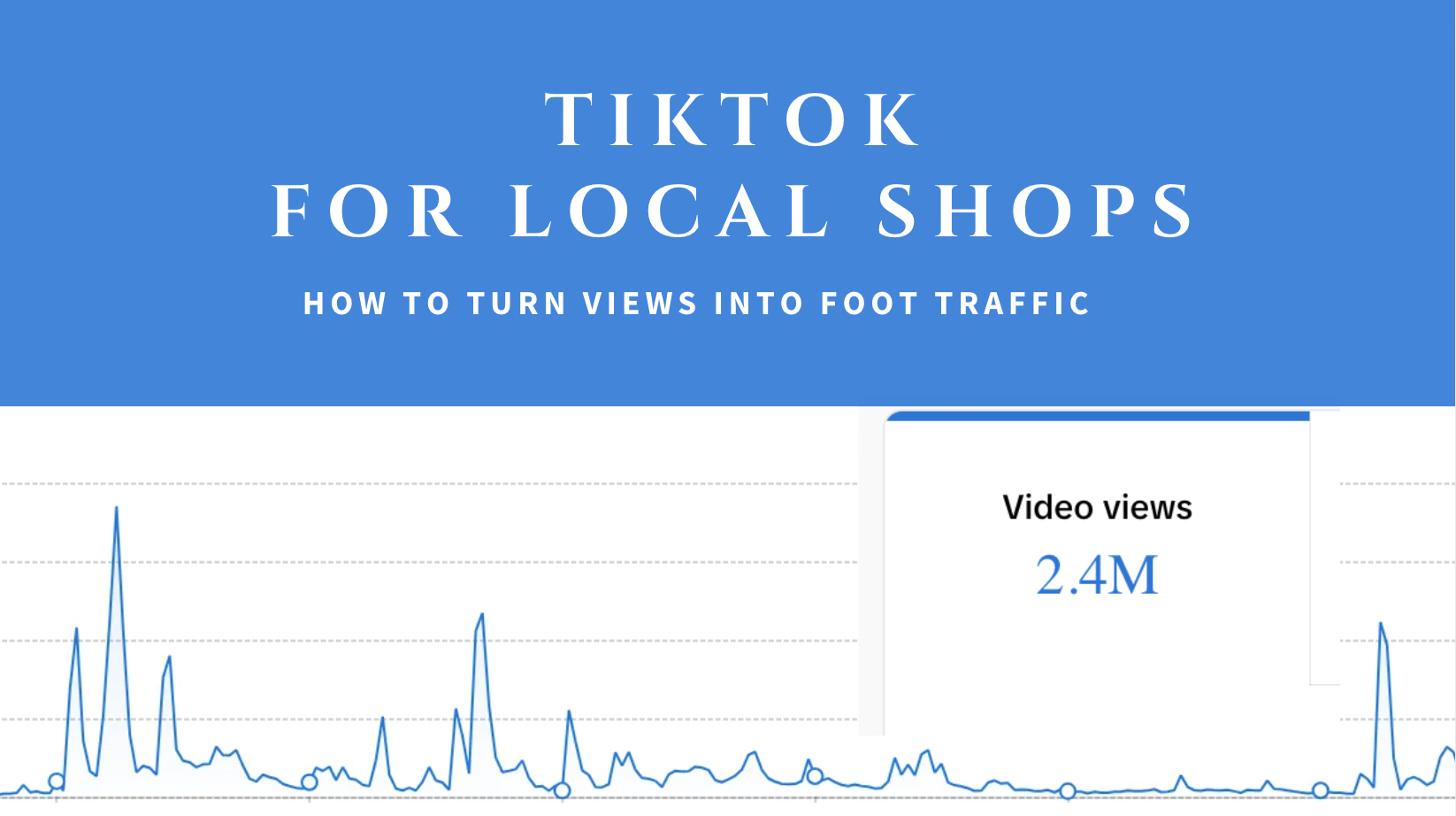
More and more businesses are joining TikTok and posting short-form video content. Small town business accounts routinely post videos with thousands, even millions, of views. I’ve personally grown two brick and mortar shop accounts — a plant shop to 27k followers and an outdoor sporting goods store to 5k and growing.
Is TikTok Good for Local Business?
Absolutely, yes. Where else can you reach hundreds of thousands of potential customers without paid ads? TikTok is one of the best platforms for exposing your business to new customers.
Unlike other social platforms, TikTok pushes your videos out to users who show interest in your topic, and its algorithm is sophisticated enough to geotarget that content to your area, or even the whole country.
But does it drive foot traffic? In my experience, 100% it does. I’ve had customers tell me they drove from two states away to visit our shop because they saw us on TikTok. The key is creating curiosity, and it’s not as hard as it sounds.
You don’t need to pay to promote your videos. You don’t need to hire a professional videographer. You can just use an iPhone and the techniques I’m about to share.
Set the Right Goal: Foot Traffic, Not Followers
There’s not a lot of advice out there on content strategy for brick and mortar businesses on TikTok. Plenty of local shops are going viral, but going viral isn’t a business strategy. So it’s worth talking about the difference between a healthy local business page and an influencer page.
An influencer needs views and followers. Those things literally pay their bills, because their goal is to monetize the content itself – brand deals, affiliate sales, TikTok Shop. So they make content designed to go viral.
A local business needs foot traffic. People walking in and buying something is what pays your bills, not the view count. So local shop accounts should care more about engagement and community building than reach. That means most of your posts shouldn’t be selling.
TikTok thrives on community, and that community is different from your local community, and different again from the ones you build on Facebook. Think of your TikTok followers as their own group with a separate vibe from other platforms.
What local shops need is content that creates familiarity and curiosity. That’s it. And it’s simpler than it sounds.
Here’s what I mean by that: when you post videos of your actual shop, people aren’t just watching the product or the person on screen. They’re looking around in the background – the shelves, the layout, what’s on the walls, what’s happening at the register.
That background is what makes them curious enough to want to see it in person. Every time you speak to the camera, you’re becoming familiar to them. You’re not selling them a product in the video. You’re giving them a reason to want to walk in, meet you, and explore the space themselves.
Research What’s Already Working in Your Niche
Before you post anything, search TikTok for your products and services, your city name, and other businesses like yours. Get a feel for what’s already out there – what kind of videos do businesses like yours post? What do videos about your products actually show or say?
Pay attention to the keywords in video descriptions and on-screen text, and check the profiles of people in your industry. Whatever words show up most often are probably the ones people are searching most often.
Also note video length, format, and the sounds being used. Your saved videos and sounds are private by default, so build yourself a catalog of favorites you can reference later.
The goal here is simple: learn what’s working for other businesses in your niche. Usually there’s a trend or style dominating a category. Find one or two you can adapt for your own business. But trends aren’t the only thing you should post.
Use Trends … Just Use Them Wisely
Jumping on trends is a great way for a new account to get views and follows, and I strongly encourage business accounts to use them. But use them wisely.
Your business has a reputation to protect that a personal account doesn’t, and a poorly-chosen trend can send the wrong message. Plus, trends are never a guarantee. One account can post a trend and get millions of views while another gets dozens.
Not every trend is worth jumping on, and trend-chasing isn’t a growth strategy on its own. It’s a tool you pull out sometimes.
Trends aren’t just sounds, either. They’re fonts, colors, specific phrases, dances, lip-syncs, even full skits. Learning which trends are worth trying takes experience, and it depends entirely on your audience.
If your customers are conservative, skip the sounds with profanity. If your audience is young and urban, that might not matter at all. Every business has to make that call based on its own values and who it wants to attract.
A few rules I use:
- Don’t poke fun at your customer in a trend
- Speak to your customer, not your colleagues
- Only use a trend if you can tie it to your products, services, or your customer’s lifestyle
- Avoid trends that aren’t popular outside their original niche unless you see a clear way to make it your own
A quick example: dance trends. A business might get away with one if their audience is already participating in it, if their staff is part of that audience, or if they can surprise people by being unexpected. Sell skateboards and the skate influencers are doing the dance? Do it. Run an ice cream shop next to a skate park with a lot of skater regulars? Do it. Run a skateboard brand and your CEO does the dance? Do it. Own a tackle shop in a small rural town with zero skateboarders around? Skip it.
3 Types of Videos Every Local Business Should Post
Trending skits and sounds. These help you get more views and make your business look tuned in – like you get the joke your customers are already in on. It builds familiarity, adds humor, and makes you feel approachable.
Text-on-screen and POV content. This can ride a trend or be entirely your own idea. Use B-roll, footage of your shop in action: staff working, a full restaurant, a slow pan of the interior, a close-up on a product. Mute it, add a sound, and let the on-screen text do the talking.
- POV: you hated wide-leg jeans until you tried these on.
- POV: you just found your new favorite cafe.
Talking videos. Every business needs these. Get an owner or staff member on camera talking directly to your customers. A mix of educational and storytelling content works best. Educational content examples include a how-to, a styling tip, a product recommendation. Storytelling is the new customer review: walk through a customer’s transformation, a problem you solved, a time you went above and beyond.
Bonus tip: scan comments for talking video ideas. If a customer asks a question, answer it in a video. If a comment gets lots of likes, make a video with your take on that topic.
Remember this: Every video is an opportunity to show off your business and increase the curiosity factor – every second of footage is someone getting a peek at your space and deciding whether they want to see it for themselves.
Stay Consistent, Repeat What Works
You don’t need to nail all three video types on day one. Pick the one that feels most natural to you or your team and start there – talking videos if someone on staff is comfortable on camera, text-on-screen if you’d rather stay behind the lens.
Post consistently, watch what gets a reaction, and let that tell you what to make more of. One thing I always tell my clients is you can’t repeat yourself too much. In other words, you can make a video on the same topic as many times as you want. Obviously spread them out a little, but if you go viral for saying something … say it again.
The businesses that win on TikTok aren’t the ones chasing every trend or posting the “perfect” video. They’re the ones who show up regularly, sound like themselves, and give people a reason to feel like they already know your shop before they’ve walked through the door.
Final Takeaway: Familiarity and curiosity is what turns a view into a visitor.
Leave a Reply